2026 Handbook of Precision Metallurgy: Soft Magnetic, Expansion, and Thermocouple Alloys
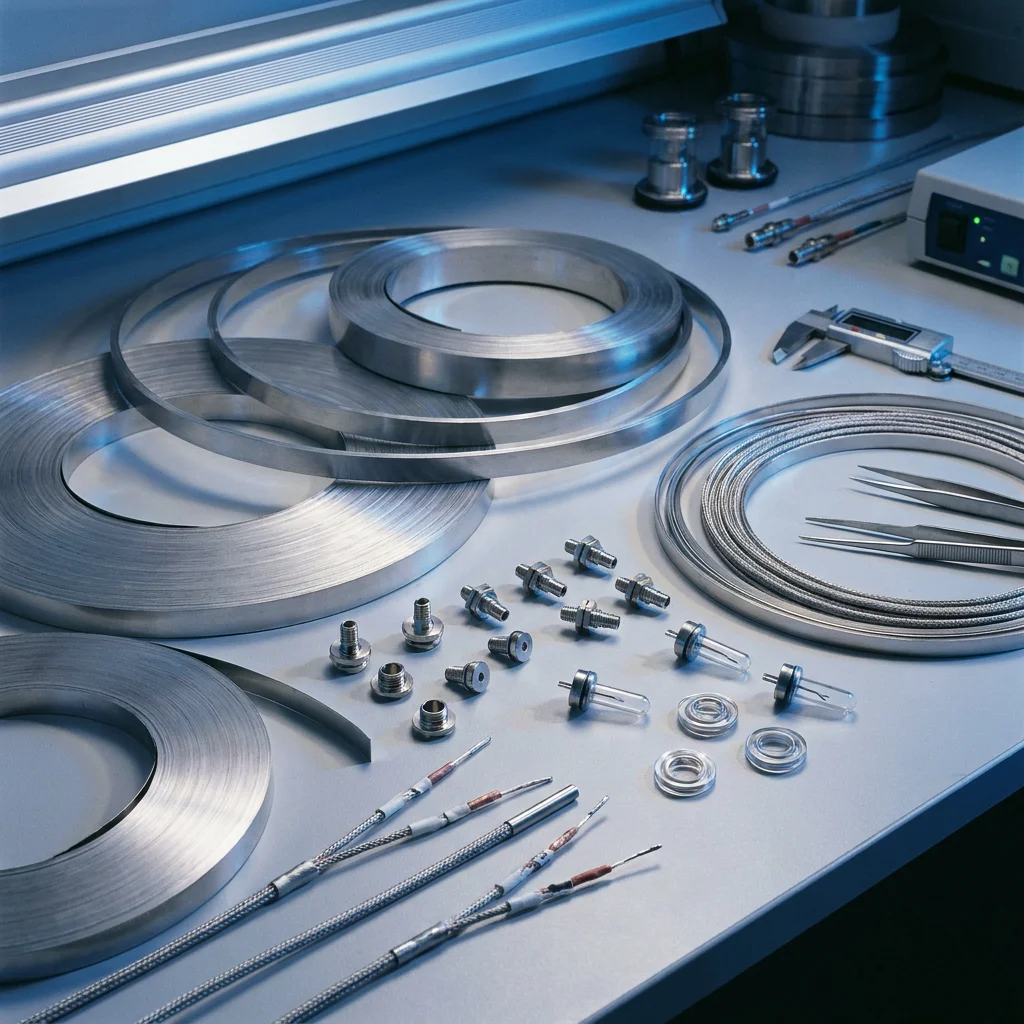
2026 Handbook of Precision Metallurgy: Soft Magnetic Alloy s, Expansion Alloys, and Thermocouple Materials
As we navigate the industrial landscape of 2026, the demand for high-performance materials has reached unprecedented heights. From the deep-space communication arrays to the micro-scale sensors in next-generation electric vehicles (EVs), the reliance on precision metallurgy is the invisible backbone of modern innovation. DLX Metal presents this comprehensive handbook to guide engineers, purchasers, and manufacturers through the intricate world of Soft Magnetic Alloys, Expansion Alloys, and Thermocouple Materials.
Introduction to Precision Metallurgy in the 2020s
Precision alloys are specialized materials engineered to exhibit specific physical and mechanical properties under strictly defined conditions. Unlike standard structural steels or general-use aluminum, these materials—often containing high percentages of nickel, cobalt, and iron—are manipulated at the molecular level to ensure stability, conductivity, or magnetic permeability. In 2026, the focus has shifted toward miniaturization and extreme environmental resilience, making materials like 1J50 and Invar 36 more critical than ever.
Section 1: Soft Magnetic Alloys - Powering High-Frequency Electronics
Soft magnetic alloys are materials that are easily magnetized and demagnetized. They are characterized by high magnetic permeability, low coercive force, and low hysteresis loss. These properties are essential for efficient energy conversion and signal processing.
Material Analysis: 1J50 (Ni50 Permalloy)
1J50 is a nickel-iron soft magnetic alloy containing approximately 50% nickel. It is renowned for its high saturation magnetic induction and high permeability. In 2026, 1J50 remains the gold standard for transformer cores, magnetic amplifiers, and relay components.
Magnetic Permeability: 1J50 offers exceptional initial and maximum permeability, allowing for high efficiency in magnetic circuits.
Saturation Induction: With a saturation induction (Bs) of approximately 1.55T, it handles significant magnetic flux before reaching its limit.
Stability: It maintains consistent performance across a wide temperature range, a necessity for aerospace applications.
Technical Data: Comparison of 1J Series Alloys
| Grade | Ni Content (%) | Saturation Induction (T) | Initial Permeability (mH/m) | Coercive Force (A/m) | Primary Application |
|---|---|---|---|---|---|
| 1J50 | 49.0 - 50.5 | 1.55 | ≥ 1.2 | ≤ 8.0 | Small transformers, chokes |
| 1J79 | 78.5 - 80.0 | 0.75 | ≥ 25 | ≤ 1.6 | Magnetic shielding, high-precision sensors |
| 1J85 | 79.0 - 81.0 | 0.80 | ≥ 35 | ≤ 1.2 | Pulse transformers, magnetic heads |
| 1J22 | Co 49, V 2 | 2.40 | Moderate | ≤ 80 | High-power motors, aviation rotors |
Section 2: Expansion Alloys - Dimensional Stability Under Thermal Stress
Expansion alloys, specifically low-expansion and controlled-expansion alloys, are designed to maintain their dimensions or match the expansion of other materials (like glass or ceramics) when subjected to temperature changes.
Material Analysis: Invar 36 (4J36)
Invar 36 is the most famous low-expansion alloy, consisting of 36% nickel and a balance of iron. Its defining characteristic is its "Invar effect"—a near-zero coefficient of thermal expansion (CTE) around room temperature. In 2026, its role in satellite structural components and laser systems is irreplaceable.
Ultra-Low CTE: Between -20°C and 100°C, the CTE of Invar 36 is less than 1.5 × 10^-6/°C.
Cryogenic Stability: Unlike many metals that become brittle, Invar 36 retains excellent toughness and stability at extremely low temperatures.
Workability: While tough, it can be machined and welded using specialized techniques, which DLX Metal has refined through decades of experience.
Material Analysis: Kovar (4J29)
For applications requiring a hermetic seal between metal and glass, Kovar is the industry leader. It contains 29% nickel and 17% cobalt. Its expansion curve matches that of borosilicate glass, preventing cracks during thermal cycling in vacuum electronics and semiconductor packaging.
Technical Data: Expansion Alloy Properties
| Grade | Main Composition | CTE (20-100°C) | Density (g/cm³) | Thermal Conductivity (W/m·K) | Typical Use |
|---|---|---|---|---|---|
| Invar 36 (4J36) | Ni 36, Fe Bal | 1.2 × 10^-6 | 8.1 | 10.5 | Optical instruments, LCD frames |
| Kovar (4J29) | Ni 29, Co 17, Fe Bal | 5.1 × 10^-6 | 8.3 | 17.0 | Integrated circuit leads, glass-to-metal seals |
| 4J42 | Ni 42, Fe Bal | 4.5 × 10^-6 | 8.12 | 14.6 | Transistors, electric vacuum valves |
Section 3: Thermocouple Materials - Precision Temperature Measurement
Thermocouples operate on the Seebeck effect, where a temperature gradient across two dissimilar conductors generates a voltage. Selecting the right thermocouple wire is critical for accuracy in the extreme temperatures of 2026's industrial furnaces and hydrogen fuel cells.
Material Analysis: Type K Thermocouple (Chromel-Alumel)
Type K is the most common general-purpose thermocouple. It consists of a positive leg (Chromel: 90% Nickel, 10% Chromium) and a negative leg (Alumel: 95% Nickel, 2% Manganese, 2% Aluminum, 1% Silicon).
Range: It effectively measures temperatures from -200°C to +1260°C.
Oxidation Resistance: The nickel-based composition provides excellent resistance to oxidation in clean, oxidizing atmospheres.
Cost-Effectiveness: Compared to noble metal thermocouples (like Type R or S), Type K offers high accuracy at a fraction of the cost.
Technical Data: Standard Thermocouple Comparison
| Type | Materials (Pos / Neg) | Max Temp (°C) | Sensitivity (µV/°C) | Environment Suitability |
|---|---|---|---|---|
| Type K | NiCr / NiAl | 1260 | ~41 | Oxidizing, Inert |
| Type J | Iron / Constantan | 750 | ~55 | Reducing, Vacuum |
| Type S | Pt-10%Rh / Pt | 1600 | ~10 | High-Temp Oxidizing |
| Type T | Copper / Constantan | 350 | ~43 | Cryogenic, Moist |
2026 Trends in Precision Metallurgy
The year 2026 marks a turning point in how we source and utilize precision alloys. Three major trends are dominating the market:
Additive Manufacturing Integration: 3D printing of 1J50 and Invar 36 powders allows for complex geometries in magnetic shielding and aerospace brackets that were previously impossible to machine.
Hydrogen Economy Readiness: Thermocouple materials and expansion alloys are being redesigned to resist hydrogen embrittlement, essential for the storage and transport of green hydrogen.
Sustainable Sourcing: Environmental compliance in nickel and cobalt mining has become a mandatory requirement for global supply chains. DLX Metal ensures all materials meet the latest 2026 sustainability standards.
Industrial Applications Across Sectors
Aerospace and Defense
In 2026, the proliferation of LEO (Low Earth Orbit) satellites has spiked the demand for Invar 36. These satellites experience rapid temperature swings as they move from sunlight to shadow; expansion alloys ensure that communication antennas remain perfectly aligned.
Medical Technology
High-permeability soft magnetic alloys like 1J79 are used in MRI machines and advanced diagnostic equipment. Their ability to shield sensitive electronics from external magnetic interference is vital for high-resolution imaging.
Renewable Energy
Thermocouple materials are critical in the monitoring of geothermal power plants and advanced solar thermal arrays, where precise temperature control dictates the efficiency of the entire grid.
Common Industry Pain Points and DLX Metal Solutions
Navigating the precision alloy market often comes with significant challenges. Here is how DLX Metal addresses the most common issues faced by engineers in 2026:
Pain Point: Property Inconsistency. Even a 0.1% deviation in chemical composition can ruin the magnetic properties of 1J50.
Solution: We utilize vacuum induction melting (VIM) and electroslag remelting (ESR) to ensure ultra-pure compositions and uniform microstructure.Pain Point: Long Lead Times. The specialized nature of these alloys often leads to months of waiting.
Solution: DLX Metal maintains a strategic inventory of standard sizes in Invar 36 and Type K wire, reducing lead times from months to weeks.Pain Point: Certification and Compliance. Global markets require rigorous documentation.
Solution: Every shipment includes detailed mill test certificates (MTC), chemical analysis reports, and physical property testing data.
Frequently Asked Questions (FAQ)
Q: Can Invar 36 be welded to other steels?
A: Yes, Invar 36 can be welded to stainless steel and carbon steel. However, the filler metal must be chosen carefully (often an Invar-matching filler) to manage the differential expansion at the joint and prevent cracking.
Q: How does 1J50 differ from 1J85 in performance?
A: 1J50 has higher saturation induction, making it better for power-related components like transformers. 1J85 has much higher permeability but lower saturation, making it ideal for high-sensitivity shielding and signal sensors.
Q: Why is Cobalt added to Kovar?
A: Cobalt is added to the nickel-iron base to lower the expansion coefficient and ensure that the transformation from austenite to martensite does not occur within the working temperature range, which would cause permanent dimensional changes.
Q: What is the maximum continuous service temperature for Type K thermocouples?
A: For continuous use in oxidizing atmospheres, the limit is approximately 1100°C for heavy-gauge wires. Finer wires will have a lower limit due to accelerated oxidation.
Conclusion: Partnering for a Precise Future
The field of precision metallurgy is one of constant evolution. As we look toward the remainder of 2026 and beyond, the materials we choose today will define the reliability and efficiency of tomorrow's technology. Whether you require the magnetic excellence of 1J50, the thermal stability of Invar 36, or the accurate sensing of Type K materials, DLX Metal is your dedicated partner in excellence.
For custom specifications, technical consultations, or volume quotes, please reach out to our engineering team.
Contact us via the website inquiry form to discuss your 2026 precision alloy requirements.