2026 Industry Report: Precision Engineering with Soft Magnetic Alloys (Permalloy, 1J79, 1J85, 1J50)
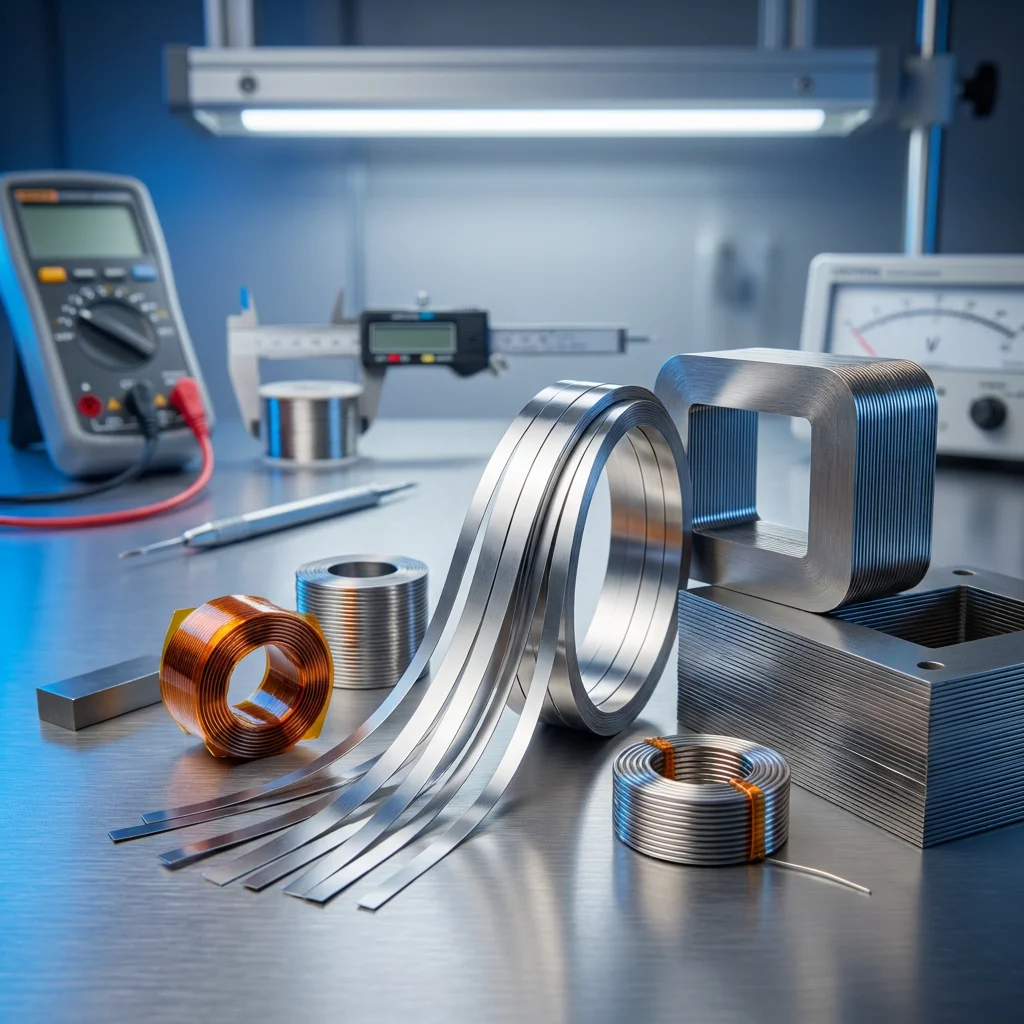
Precision Engineering with Soft Magnetic Alloys (Permalloy, 1J79, 1J85, 1J50 ): 2026 Industry Analysis
The global landscape of precision engineering has reached a pivotal juncture in 2026. As industries transition toward ultra-efficient electrification, high-frequency telecommunications, and hypersensitive sensing technologies, the demand for advanced soft magnetic alloys has surged to unprecedented levels. This comprehensive report, published on April 30, 2026, by DLX Metal, examines the critical role of Permalloy and related nickel-iron alloys in modern industrial applications, providing a deep dive into material science, market trends, and technical parameters that define the current era of magnetic performance.
Soft magnetic alloys, particularly the nickel-iron (Ni-Fe) series known as Permalloys, are characterized by their high magnetic permeability, low coercivity, and minimal hysteresis loss. In 2026, these materials are no longer just components; they are the enabling foundation for the next generation of energy-efficient systems. DLX Metal, as a leading Chinese manufacturer and global exporter, has spearheaded the development of high-purity variants that meet the stringent requirements of international aerospace, automotive, and medical standards.
1. Deep Dive: Material Analysis of Key Soft Magnetic Alloys
The 2026 market is dominated by four primary grades of soft magnetic alloys, each tailored for specific magnetic environments. Understanding the nuances between 1J50, 1J79, 1J85, and standard Permalloy is essential for precision engineering design.
1J50: High Saturation Induction and Stability
1J50 is a 50% nickel-iron alloy that strikes a balance between high magnetic permeability and high saturation induction. In the context of 2026 engineering, 1J50 is the "workhorse" for power applications. Its high saturation induction (approximately 1.55 Tesla) makes it ideal for components that must handle significant magnetic flux without reaching saturation, such as small power transformers, electromagnetic clutches, and relay parts. DLX Metal’s 1J50 production utilizes vacuum induction melting (VIM) to ensure minimal impurities, resulting in consistent magnetic properties across various batches.
1J79: The Industry Standard Permalloy
Often referred to as high-permeability Permalloy (approx. 80% nickel), 1J79 is the cornerstone of sensitive magnetic shielding and high-precision signal processing. Its primary advantage is its exceptionally high initial permeability and maximum permeability. In 2026, as electronic environments become increasingly crowded with electromagnetic interference (EMI), 1J79 has become indispensable for shielding delicate sensors and medical diagnostics equipment like MRI systems. The alloy’s ability to "channe" magnetic field lines away from sensitive components is unmatched in its price-to-performance ratio.
1J85: The Peak of Magnetic Permeability
For applications requiring the absolute maximum level of sensitivity, 1J85 (often containing molybdenum for enhanced properties) is the premium choice. With a nickel content of around 80-81%, 1J85 offers the highest initial permeability among the Ni-Fe series. In the 2026 aerospace sector, 1J85 is utilized in magnetic heading sensors and ultra-low frequency antennas. The material requires specialized hydrogen atmosphere annealing to achieve its peak performance, a process that DLX Metal has refined to an exact science to ensure that the final product reaches its theoretical magnetic limits.
2. Technical Parameter Comparison Table
To assist engineers in material selection, the following table outlines the typical physical and magnetic properties of these alloys as of the 2026 standard.
| Alloy Grade | Nickel Content (%) | Saturation Induction (T) | Initial Permeability (mH/m) | Max Permeability (mH/m) | Coercivity (A/m) | Density (g/cm³) |
|---|---|---|---|---|---|---|
| 1J50 | 49.0 - 50.5 | 1.50 - 1.60 | ≥ 4.0 | ≥ 40 | ≤ 8.0 | 8.20 |
| 1J79 | 78.5 - 80.0 | 0.75 - 0.85 | ≥ 25 | ≥ 120 | ≤ 1.0 | 8.60 |
| 1J85 | 80.0 - 81.5 | 0.70 - 0.80 | ≥ 40 | ≥ 250 | ≤ 0.6 | 8.75 |
| Permalloy 80 | ~80.0 | 0.80 | 30-50 | 200-300 | < 1.0 | 8.70 |
3. Major Applications in 2026: EVs, Sensors, and Beyond
The year 2026 has seen a dramatic expansion in the use cases for soft magnetic alloys. No longer confined to traditional industrial relays, these materials are at the heart of the "Green Tech" revolution.
Electric Vehicle (EV) Evolution
In the automotive sector, 2026 marks the widespread adoption of 800V architecture and silicon carbide (SiC) inverters. This shift requires magnetic components that can operate efficiently at higher frequencies with minimal heat generation. 1J50 and 1J79 are used extensively in current sensors and high-speed motor resolvers. The precision offered by DLX Metal’s Permalloy strips allows for more accurate torque control in EV motors, directly contributing to increased vehicle range and battery longevity.
Advanced Sensing and IoT
As the "Internet of Everything" matures, billions of sensors are deployed worldwide. Magnetic sensors, particularly those using 1J85 cores, provide the high sensitivity needed for non-contact current monitoring in smart grids and industrial automation. The 2026 smart factory relies on these sensors to detect micro-variations in electrical current, preventing equipment failure before it occurs.
High-Frequency Telecommunications (6G Development)
While 5G is the global standard in 2026, research into 6G frequencies is well underway. Soft magnetic alloys are being refined to minimize eddy current losses at gigahertz frequencies. Thin-gauge Permalloy foils (down to 0.01mm) produced by DLX Metal are being tested for use in high-frequency transformer cores and signal isolators that will power the future of connectivity.
4. 2026 Industry Trends: The Push for Miniaturization and Sustainability
The soft magnetic alloy industry is currently being shaped by three major trends:
Miniaturization: Components are getting smaller, but power requirements are increasing. This necessitates materials with higher saturation flux density and lower core losses. Thin-film Permalloy is becoming a standard in micro-electromechanical systems (MEMS).
Sustainability and Recycling: In 2026, the carbon footprint of material production is a key purchasing criterion. DLX Metal has implemented green manufacturing processes, reducing energy consumption during the lengthy annealing cycles required for 1J85 and 1J79.
Advanced Additive Manufacturing: 3D printing of soft magnetic alloys is no longer experimental. Engineers are now designing complex magnetic circuits that were previously impossible to machine, using gas-atomized Permalloy powders.
5. Customer Pain Points and Engineering Solutions
Sourcing soft magnetic alloys for precision engineering often comes with significant challenges. Below are the common pain points identified by global buyers in 2026 and the solutions provided by DLX Metal.
| Pain Point | Impact on Engineering | DLX Metal Solution |
|---|---|---|
| Magnetic Instability | Fluctuating sensor readings and system errors. | Strict vacuum melting and hydrogen annealing control for uniform grain structure. |
| Thickness Variance | Inconsistent performance in stacked laminations. | Precision cold-rolling mills achieving tolerances within +/- 0.002mm. |
| High Core Losses | Overheating and energy inefficiency. | Optimized chemical compositions to maximize resistivity and reduce eddy currents. |
| Supply Chain Delays | Production downtime and missed deadlines. | Strategic inventory management and direct global shipping from our China hub. |
6. The DLX Metal Advantage: A Top Chinese Exporter’s Perspective
As a leading name in the Chinese metallurgical industry, DLX Metal (www.dlxmetal.com) has built a reputation for excellence that spans decades. In 2026, our facility continues to set the benchmark for soft magnetic alloy production. We don't just supply raw materials; we provide technical partnerships.
Quality Assurance: Every batch of 1J79 or 1J50 undergoes rigorous testing, including DC and AC magnetic property measurements, metallographic analysis, and ultrasonic flaw detection. Our 2026 quality management system is fully integrated with digital tracking, providing customers with a complete "material birth certificate."
Customization: We understand that 2026 engineering requires bespoke solutions. Whether you need specific dimensions in cold-rolled strips, hot-rolled plates, or precision-drawn wires, DLX Metal offers the flexibility to manufacture to your exact specifications. Our R&D team works closely with clients to adjust alloy compositions for specific frequency responses or environmental conditions.
7. FAQ: Frequently Asked Questions in 2026
Q: Why choose 1J85 over 1J79 for magnetic shielding?
A: While both are high-permeability alloys, 1J85 offers significantly higher maximum permeability. In 2026, where precision is paramount, 1J85 is preferred for applications involving extremely weak magnetic fields, such as zero-magnetism laboratories or sensitive satellite instruments.
Q: How does heat treatment affect the performance of Permalloy?
A: Heat treatment, specifically high-temperature annealing in a dry hydrogen atmosphere, is the most critical step. It eliminates internal stresses and promotes grain growth, which is essential for achieving the low coercivity and high permeability that Permalloy is famous for. Unannealed material will perform poorly in any magnetic circuit.
Q: What are the primary export regions for DLX Metal’s alloys?
A: In 2026, our primary markets include the European Union (Germany, France, Italy), North America, and Southeast Asia (South Korea, Japan, Vietnam). We are fully compliant with REACH, RoHS, and various international aerospace standards.
Q: Can Permalloy be used in high-temperature environments?
A: Soft magnetic alloys like 1J50 and 1J79 have specific Curie temperatures (the point where they lose their magnetic properties). For 1J50, this is around 500°C. For applications exceeding 200°C, engineers must account for the gradual decrease in permeability and saturation induction. DLX Metal provides thermal-magnetic profiles to assist in these designs.
8. Conclusion: Designing for the Future
As we look toward the remainder of 2026 and into the next decade, the role of precision engineering with soft magnetic alloys will only grow in importance. The ability to control magnetic flux with extreme accuracy is the key to unlocking the potential of renewable energy, autonomous transportation, and quantum computing.
At DLX Metal, we remain committed to pushing the boundaries of what is possible with Permalloy, 1J79, 1J85, and 1J50. Our dedication to purity, precision, and performance ensures that our clients stay ahead in a competitive global market. For engineers and procurement specialists looking for the highest quality soft magnetic materials, DLX Metal is your trusted partner for the innovations of today and the breakthroughs of tomorrow.
Report published on April 30, 2026. For inquiries and technical datasheets, please visit www.dlxmetal.com.