The 2026 Strategic Guide to Precision Metallurgy: Advanced Analysis of Thermocouples, Soft Magnetic,
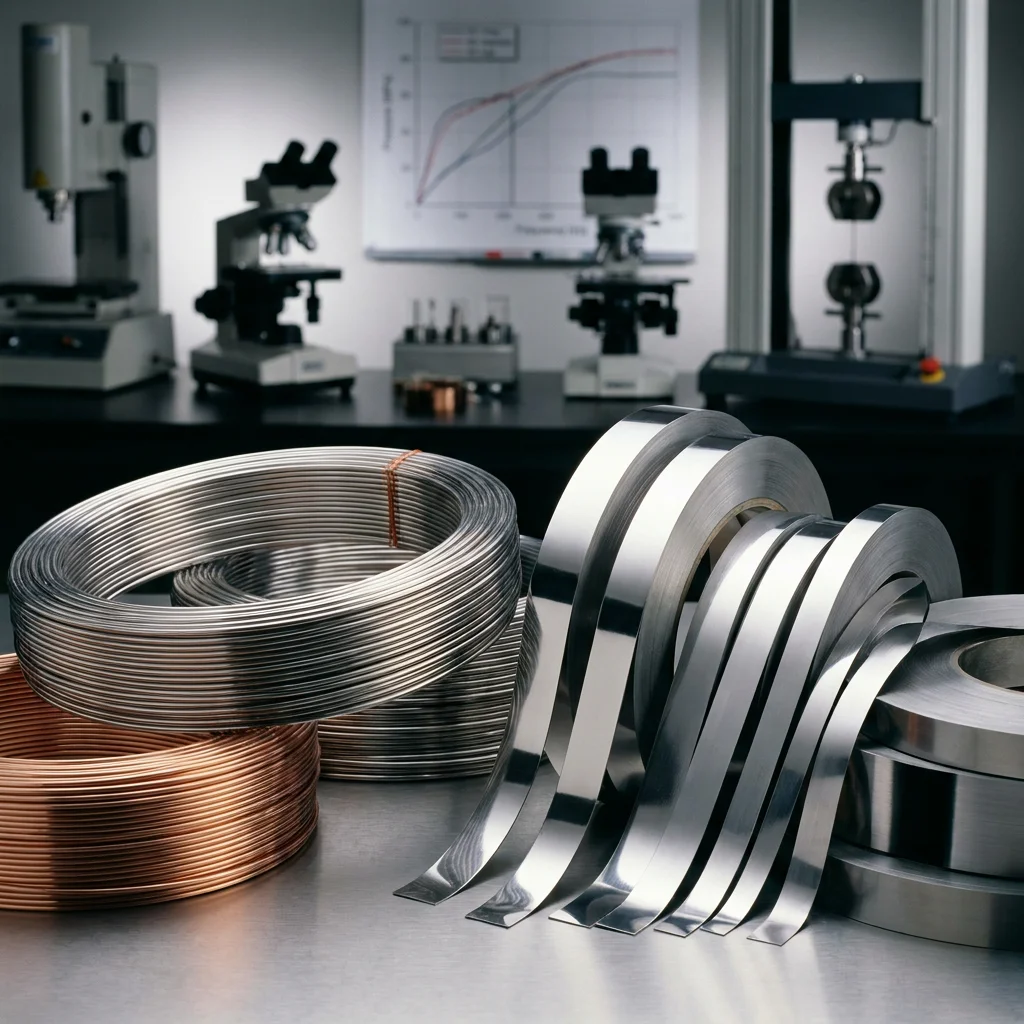
The 2026 Strategic Guide to Precision Metallurgy: Advanced Analysis of Thermocouples, Soft Magnetic, and Expansion Alloy s
As we navigate the industrial landscape of May 2026, the demand for high-precision materials has reached a critical peak. Modern engineering challenges—from high-frequency telecommunications and aerospace sensing to medical diagnostics—require alloys with tightly controlled electromagnetic, thermal, and electrical properties. Precision metallurgy is the driving force behind these technologies, enabling the sensors, actuators, and shielding systems that define our era. This comprehensive technical guide explores three critical pillars of precision metallurgy in 2026: Thermocouple materials, Soft Magnetic alloys, and Controlled Expansion (Expansion) alloys. Serving as a strategic resource for B2B procurement and engineering teams, this guide provides the technical foundation needed to optimize system performance and reliability.
1. The State of Precision Metallurgy in 2026
The year 2026 is defined by a shift toward "Intelligent Materials." In precision metallurgy, this means alloys are no longer just passive components but are engineered at the molecular level to provide predictable responses to external stimuli. Advanced vacuum melting techniques, such as Vacuum Induction Melting (VIM) and Vacuum Arc Remelting (VAR), have become the industry standard, ensuring ultra-pure materials with minimal trace impurities. This purity is vital for achieving the tight tolerances required for modern sensors and high-frequency electronic components.
Furthermore, the integration of real-time monitoring and AI-driven quality control in the manufacturing process has allowed for unprecedented consistency. Every batch of precision alloy in 2026 is verified through high-resolution spectroscopy and physical testing to ensure it meets the specific electromagnetic and thermal requirements of the end application.
2. Thermocouple Materials: The Foundation of Thermal Sensing
In the high-stakes environments of aerospace engines, industrial furnaces, and semiconductor manufacturing, accurate temperature measurement is paramount. Thermocouples, which utilize the Seebeck effect to convert temperature differences into electrical voltage, are the primary tools for these applications. In 2026, the focus has shifted toward long-term stability and resistance to "measurement drift."
Type K (Chromel-Alumel) vs. Type N (Nicrosil-Nisil)
While Type K remains the most common thermocouple for general industrial use, Type N has become the preferred choice for high-temperature applications up to 1260°C. Type N alloys (Nicrosil and Nisil) are specifically engineered to resist the "green rot" oxidation and hysteresis effects that can plague Type K wires in certain atmospheres. The addition of Silicon and Magnesium to the nickel base creates a more stable protective oxide layer, ensuring that measurement drift is minimized over thousands of thermal cycles. In 2026, DLX Metal provides ultra-pure Type N wires that meet the most stringent aerospace and nuclear standards.
Noble Metal Thermocouples: Type S, R, and B
For temperatures exceeding 1300°C, platinum-rhodium based thermocouples (Types S, R, and B) are essential. In 2026's glass and steel industries, these noble metal sensors are the only way to achieve the precision required for high-quality production. Their immunity to oxidation and high chemical stability in air makes them the "gold standard" for calibration and critical control points in advanced furnace systems.
| Thermocouple Type | Positive Alloy | Negative Alloy | Max Operating Temp (°C) | Key Advantage in 2026 |
|---|---|---|---|---|
| Type K | Chromel (Ni-Cr) | Alumel (Ni-Al) | 1260 | Cost-effective and versatile |
| Type N | Nicrosil (Ni-Cr-Si) | Nisil (Ni-Si-Mg) | 1260 | Superior stability and oxidation resistance |
| Type J | Iron | Constantan (Cu-Ni) | 760 | High sensitivity for lower ranges |
| Type S | Pt-10% Rh | Platinum | 1600 | Global standard for extreme precision |
3. Soft Magnetic Alloys: Powering the Electromagnetic Revolution
Soft magnetic alloys are materials that can be easily magnetized and demagnetized. In 2026, their importance has skyrocketed due to the massive growth in electric vehicle (EV) motors, high-frequency transformers, and electromagnetic interference (EMI) shielding for sensitive electronic systems.
Permalloy (Ni-Fe Alloys: 1J79 , 1J85)
Permalloys are characterized by their extremely high initial and maximum magnetic permeability and very low coercivity. In 2026, the 80% nickel grade (1J85) is the primary material for high-sensitivity sensors and magnetic shielding in medical devices like MRI machines. The precision annealing processes used by DLX Metal in 2026 ensure that the grain structure of the alloy is optimized for maximum magnetic flux density and minimal hysteresis loss. This leads to clearer imaging and more accurate diagnostics in the healthcare sector.
Iron-Cobalt Alloys (Hiperco Equivalents: 1J22)
When the highest possible saturation induction is required, iron-cobalt alloys are used. These materials can achieve magnetic saturation levels (up to 2.4 Tesla) that far exceed those of silicon steels or nickel-iron alloys. In 2026, they are critical for high-performance motors in aerospace actuators and high-efficiency generators where power density and weight reduction are the primary design constraints.
Soft Magnetic Composites (SMCs)
While standard silicon steel remains the workhorse for power transformers, 2026 has seen the rise of Soft Magnetic Composites. These are iron-based powders coated with an insulating layer, allowing for 3D magnetic flux paths and significantly reduced eddy current losses at high frequencies. They are enabling the next generation of compact, high-speed electric motors for robotics and urban air mobility.
4. Controlled Expansion Alloys: The Interface of Precision
Expansion alloys are materials with a specific, predictable coefficient of thermal expansion (CTE). They are vital in 2026 for glass-to-metal and ceramic-to-metal seals, where the two materials must expand and contract at the same rate to prevent mechanical failure during thermal cycling.
Invar 36 (UNS K93600 / 4J36)
Invar 36 (36% Nickel) is famous for its near-zero thermal expansion at temperatures up to 200°C. In 2026, it is used in laser systems, high-precision measuring instruments, and large-scale composite molds for the aerospace industry. Its stability ensures that components remain dimensionally accurate regardless of ambient temperature changes, which is critical for the next generation of space-based observatories.
Kovar (Fe-Ni-Co Alloy: 4J29)
Kovar is designed to match the expansion characteristics of borosilicate glass and alumina ceramics. In 2026, it is the primary material for high-reliability electronic packaging, including power transistors, diodes, and integrated circuit lead frames. Its ability to maintain a vacuum-tight seal across a wide temperature range makes it indispensable for satellite electronics and high-performance communication hardware.
| Alloy Name | Main Composition | CTE (x10^-6/K) | Primary Use Case in 2026 |
|---|---|---|---|
| Invar 36 | Ni 36%, Fe Bal | 1.2 (at 20-100°C) | Precision optics and Laser systems |
| Kovar (4J29) | Ni 29%, Co 17%, Fe Bal | 5.1 (at 20-400°C) | Glass-to-metal vacuum sealing |
| Alloy 42 ( 4J42 ) | Ni 41%, Fe Bal | 5.3 (at 20-300°C) | Semiconductor lead frames |
5. Critical Processing: The Role of Heat Treatment in 2026
The final physical and electromagnetic properties of precision alloys are determined as much by the final heat treatment as by the initial chemical composition. In 2026, the following processes are critical:
Magnetic Annealing: Soft magnetic alloys must be annealed in a dry hydrogen atmosphere at temperatures often exceeding 1100°C. This process grows the grain size and removes carbon and oxygen, maximizing magnetic permeability.
Vacuum Degassing: For vacuum-sealed electronics, expansion alloys must be thoroughly degassed to prevent the release of trapped gases over time, which would destroy the vacuum and lead to device failure.
Controlled Oxidation: Some Kovar components require a specific pre-oxidation step to ensure a strong chemical bond with the glass or ceramic during the sealing process.
6. Application Focus: Precision Metallurgy in Action
In 2026, these materials are driving innovation in several key sectors:
Next-Generation Telecommunications (6G Development)
The development of 6G hardware requires soft magnetic shielding that can operate at much higher frequencies than current 5G systems. Kovar lead frames and heat sinks ensure that the power-dense chips can operate reliably without overheating or failing due to thermal expansion mismatch.
Medical Diagnostics and MRI Technology
MRI machines rely on the absolute highest magnetic permeability provided by Permalloy (1J85) shielding to protect sensitive detectors from the earth's magnetic field and surrounding industrial noise. This enables the high-resolution imaging that is standard in 2026 hospitals.
Aerospace Sensing and Flight Control
Modern jet engines use hundreds of Type N thermocouples to monitor combustion temperatures in real-time. This data allows the engine control unit to optimize fuel efficiency and reduce carbon emissions. Invar structural components ensure that flight control sensors remain accurate even at the extreme cold of high-altitude flight.
7. FAQ: Technical Insights for Precision Metallurgy
Q1: Why is Invar 36 sensitive to its heat treatment history?
A: The low-expansion property of Invar is a result of the "Invar Effect," which relates to specific magnetic interactions in the crystal lattice. Improper heat treatment can change the magnetic state, causing the expansion rate to increase unexpectedly. In 2026, DLX Metal uses strictly controlled cooling cycles to ensure the stability of the Invar effect.
Q2: Can I use Permalloy for high-frequency shielding?
A: While Permalloy is excellent for DC and low-frequency shielding, for high-frequency applications (above several kHz), you may need a material with higher electrical resistivity, such as specific amorphous ribbons, to minimize eddy current losses.
Q3: What is the benefit of "VIM" melting for thermocouple alloys?
A: Vacuum Induction Melting (VIM) removes volatile impurities and dissolved gases. This results in a cleaner, more homogeneous alloy with much tighter control over the EMF (electromotive force) values, ensuring the highest sensor accuracy in 2026.
Q4: Is Kovar compatible with all types of glass?
A: No, Kovar is specifically designed to match borosilicate (hard) glasses. It does not match standard soda-lime (soft) glass. Using Kovar with the wrong glass type will result in high internal stress and eventual seal failure.
Conclusion: The Foundation of Technical Excellence
The year 2026 has shown that the smallest metallurgical details can have the largest impact on industrial performance. Precision alloys—the thermocouples that measure, the magnetic alloys that shield, and the expansion alloys that seal—are the silent enablers of our modern world. At DLX Metal, we are dedicated to providing the technical expertise and high-quality materials that your precision projects require. Our commitment to metallurgical excellence ensures that your sensors remain accurate, your shields remain effective, and your seals remain permanent.
For more information on our range of precision alloys, technical datasheets, or to receive a comprehensive quote for your 2026 project, please reach out to our engineering team. We look forward to being your trusted partner in the world of advanced materials.
Contact us via the website inquiry form for professional technical support and competitive quotations.
Publication Date: May 25, 2026
Author: DLX Metal Technical Engineering Department