Precision Metallurgy in 2026: A Technical Analysis of Soft Magnetic Alloys, Expansion Alloys
Precision Metallurgy in 2026: A Technical Analysis of Soft Magnetic Alloys, Expansion Alloy s, and Thermocouple Materials
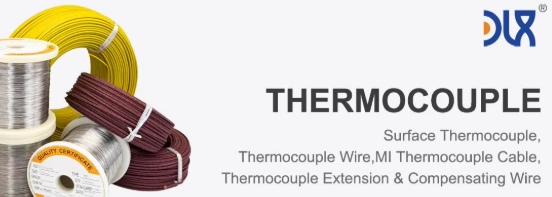
As we navigate through the industrial landscape of 2026, the demand for high-precision materials has reached unprecedented levels. Precision metallurgy, once a niche field, now stands at the core of global technological advancement. From the intricate sensors in smart grids to the critical components of aerospace instrumentation, the role of specialized alloys cannot be overstated. DLX Metal, as a premier Chinese exporter and manufacturer, continues to lead the way in providing high-performance solutions for these demanding sectors. This technical analysis explores the current state and future trends of soft magnetic alloys, expansion alloys, and thermocouple materials, providing a comprehensive guide for engineers and procurement specialists.
1. Soft Magnetic Alloys: The Pulse of Modern Electronics
Soft magnetic alloys are essential for applications requiring high magnetic permeability and low coercive force. In 2026, the push for miniaturization and energy efficiency has driven the development of alloys that can perform reliably at higher frequencies and in tighter spaces. DLX Metal specializes in the production of high-grade Permalloys, specifically the 1J series.
1J50 (50% Nickel-Iron Alloy): Known for its high saturation induction and medium permeability, 1J50 is a staple in power transformers, magnetic amplifiers, and choke coils. Its robust performance makes it ideal for industrial power systems where reliability is paramount.
1J79 (High Permeability Permalloy): Offering a balance between initial permeability and maximum permeability, 1J79 is widely used in high-sensitivity relays, magnetic shielding, and precision current transformers. Its ability to respond to weak magnetic fields is a key factor in its continued dominance in the 2026 market.
1J85 (Supermalloy): For applications requiring the absolute highest permeability, 1J85 is the material of choice. With extremely low coercivity, it is utilized in advanced pulse transformers, sensitive transducers, and high-end electromagnetic shielding. In the era of high-frequency communication systems, 1J85 provides the necessary precision to prevent signal interference.
| Alloy Grade | Initial Permeability (mH/m) | Maximum Permeability (mH/m) | Saturation Induction (T) | Coercivity (A/m) |
| 1J50 | ≥1.3 | ≥12.5 | 1.55 | ≤12 |
| 1J79 | ≥25 | ≥125 | 0.75 | ≤1.6 |
| 1J85 | ≥50 | ≥250 | 0.75 | ≤0.8 |
2. Expansion Alloys: Ensuring Structural Integrity
Thermal mismatch is a critical challenge in precision engineering. Expansion alloys, designed to have specific thermal expansion coefficients, are the solution for maintaining vacuum seals and structural integrity across varying temperatures. As aerospace and medical imaging technologies evolve in 2026, the precision of these alloys is more important than ever.
Invar 36 (FeNi36): Famous for its "invariable" volume, Invar 36 exhibits an extremely low coefficient of thermal expansion (CTE) around room temperature. It is indispensable for precision instruments, optical systems, and laser components where even a micron of movement can cause failure.
Kovar (FeNi29Co17): This nickel-cobalt-iron alloy is specifically engineered to match the expansion characteristics of borosilicate glass and alumina ceramics. It is the gold standard for power tubes, integrated circuit frames, and microwave windows, ensuring reliable hermetic seals in high-reliability electronics.
| Alloy Type | Chemical Composition (%) | CTE (20-100°C) x 10^-6/K | Density (g/cm³) | Tensile Strength (MPa) |
| Invar 36 | Ni 36, Fe Balance | 1.2 - 1.5 | 8.12 | 490 |
| Kovar | Ni 29, Co 17, Fe Balance | 4.6 - 5.2 | 8.36 | 520 |
3. Thermocouple Materials: Precision Temperature Sensing
Accurate temperature measurement is vital for industrial process control, especially in the 2026 manufacturing environment characterized by high automation. Thermocouple wires and cables must provide stable EMF (Electromotive Force) output over long periods and in harsh conditions.
Type K (Chromel-Alumel): The most common general-purpose thermocouple, Type K offers a wide temperature range and good resistance to oxidation. It is the workhorse of industrial heating and metal processing.
Type N (Nicrosil-Nisil): Developed to overcome the instabilities of Type K at high temperatures, Type N provides superior oxidation resistance and better long-term stability. It is increasingly preferred for aerospace and nuclear applications.
Type J (Iron-Constantan): While more limited in range than Type K, Type J is highly effective in reducing atmospheres. It remains a cost-effective choice for vacuum furnaces and plastic processing.
Type T (Copper-Constantan): Known for its high accuracy at low temperatures, Type T is the standard for cryogenic research and food processing applications.
| Thermocouple T ype | Standard Operating Range (°C) | EMF at 1000°C (mV) | Tolerance Class (Standard) | Atmosphere Suitability |
| Type K | -200 to 1260 | 41.276 | ±2.2°C or 0.75% | Oxidizing / Inert |
| Type N | -270 to 1300 | 36.256 | ±2.2°C or 0.75% | Oxidizing / Inert |
| Type J | 0 to 750 | 57.953 (at 750°C) | ±2.2°C or 0.75% | Reducing / Vacuum |
| Type T | -270 to 400 | 20.872 (at 400°C) | ±1.0°C or 0.75% | Oxidizing / Reducing |
4. Industrial Applications in 2026
The convergence of 5G/6G, AI, and green energy has expanded the application of precision alloys into new frontiers.
Smart Sensors: Soft magnetic alloys like 1J85 are critical for high-sensitivity current sensors used in smart grids and electric vehicle (EV) battery management systems.
Aerospace Instrumentation: Invar 36 and Kovar are essential for the structural components of satellites and high-altitude drones, where thermal stability is paramount for optical and communication equipment.
Medical Imaging: High-purity soft magnetic materials are used in MRI and CT scanners to ensure precise magnetic field control, leading to higher resolution images and better diagnostic outcomes.
Temperature Control: Thermocouple Type N and Type K are integrated into automated manufacturing lines to provide real-time thermal feedback, ensuring consistent quality in semiconductor and pharmaceutical production.
5. 2026 Industry Trends
The precision alloy industry is undergoing a significant transformation driven by the following trends:
Miniaturization: As electronic devices become smaller and more powerful, the demand for ultra-thin alloy strips and micro-wires is growing. DLX Metal has invested in advanced rolling and drawing technologies to meet these requirements.
High-Precision Electromagnetic Shielding: With the proliferation of wireless devices, managing electromagnetic interference (EMI) has become a major challenge. High-permeability alloys like 1J79 and 1J85 are being redesigned into flexible foils and coatings to provide superior shielding in compact spaces.
Sustainability and Purity: Modern metallurgy is focusing on reducing impurities like sulfur and phosphorus to enhance the magnetic and mechanical properties of alloys. DLX Metal utilizes vacuum induction melting (VIM) and electroslag remelting (ESR) to produce ultra-pure materials.
6. Customer Pain Points and Technical Solutions
In our years of serving the global market, DLX Metal has identified several recurring challenges faced by engineers:
Pain Point: Measurement Drift in Thermocouples.
Solution: Use of high-stability Type N alloys and improved insulation materials. DLX Metal provides calibrated wires with minimal EMF deviation to ensure long-term accuracy.Pain Point: Magnetic Loss at High Frequencies.
Solution: Optimization of heat treatment processes for 1J79 and 1J85 to achieve smaller grain sizes, which reduces eddy current losses.Pain Point: Thermal Mismatch leading to Seal Failure.
Solution: Tight control of chemical composition in Kovar production to ensure the CTE remains within a ±0.1 x 10^-6/K tolerance, matching the glass transition curve perfectly.
7. FAQ: Technical Insights for Precision Alloys
Q1: What is the primary advantage of 1J85 over 1J79?
A1: 1J85 has significantly higher permeability and lower coercivity, making it better suited for extremely sensitive electromagnetic applications and high-frequency shielding, whereas 1J79 is a more cost-effective solution for general-purpose high-permeability needs.
Q2: Can Invar 36 be welded?
A2: Yes, Invar 36 can be welded using standard methods like TIG and MIG. However, it is important to use matching filler metals to maintain the low expansion characteristics at the weld joint.
Q3: Why is Type N thermocouple becoming more popular than Type K?
A3: Type N (Nicrosil-Nisil) is more stable and has a higher resistance to oxidation at temperatures above 1000°C compared to Type K. It also eliminates the "green rot" corrosion and hysteresis effects often seen in Type K.
Q4: How does heat treatment affect soft magnetic alloys?
A4: Heat treatment is crucial. It removes internal stresses and promotes grain growth, which directly increases permeability and decreases coercivity. DLX Metal performs vacuum annealing to prevent oxidation during this process.
Q5: What is the maximum operating temperature for Kovar?
A5: Kovar is typically used in applications up to 450-500°C, which is the range where its expansion matches borosilicate glass. Above this temperature, the expansion rate increases significantly.
Q6: Are your thermocouple materials compliant with international standards?
A6: Yes, all DLX Metal thermocouple wires and cables are manufactured to meet or exceed IEC 60584 and ASTM E230 standards, ensuring global compatibility and reliability.
Conclusion
The field of precision metallurgy in 2026 demands a perfect blend of traditional metallurgical expertise and modern manufacturing technology. Whether you are dealing with the complexities of electromagnetic interference, the challenges of thermal expansion, or the need for precise temperature measurement, choosing the right material is the first step toward success. DLX Metal remains committed to being your trusted partner, providing the high-quality alloys needed to power the next generation of industrial innovation. For detailed specifications or a custom quote, please contact us via the website inquiry form. Our team of experts is ready to assist you with your project requirements.
Publication Date: May 14, 2026
Author: DLX Metal Technical Department