Industrial Thermocouples and Precision Alloys: 2026 Technical Guide
Industrial Guide to Thermocouple s: 2026 Technical Insights into Precision Temperature Measurement
In the rapidly evolving landscape of industrial manufacturing and precision engineering, Thermocouples remain the cornerstone of temperature measurement technology. As we move into 2026, the demand for accurate, reliable, and durable thermal sensors has never been higher. Whether in aerospace, automotive manufacturing, or chemical processing, understanding the intricacies of thermocouple technology is essential for optimizing performance and ensuring safety.
This comprehensive guide explores the fundamental principles, diverse types, and advanced applications of thermocouples, while also highlighting the critical role of supporting materials like soft magnetic alloys and expansion alloys in precision metallurgy. By the end of this article, you will have a thorough understanding of how these instruments operate and how to select the best alloy for your specific industrial needs.
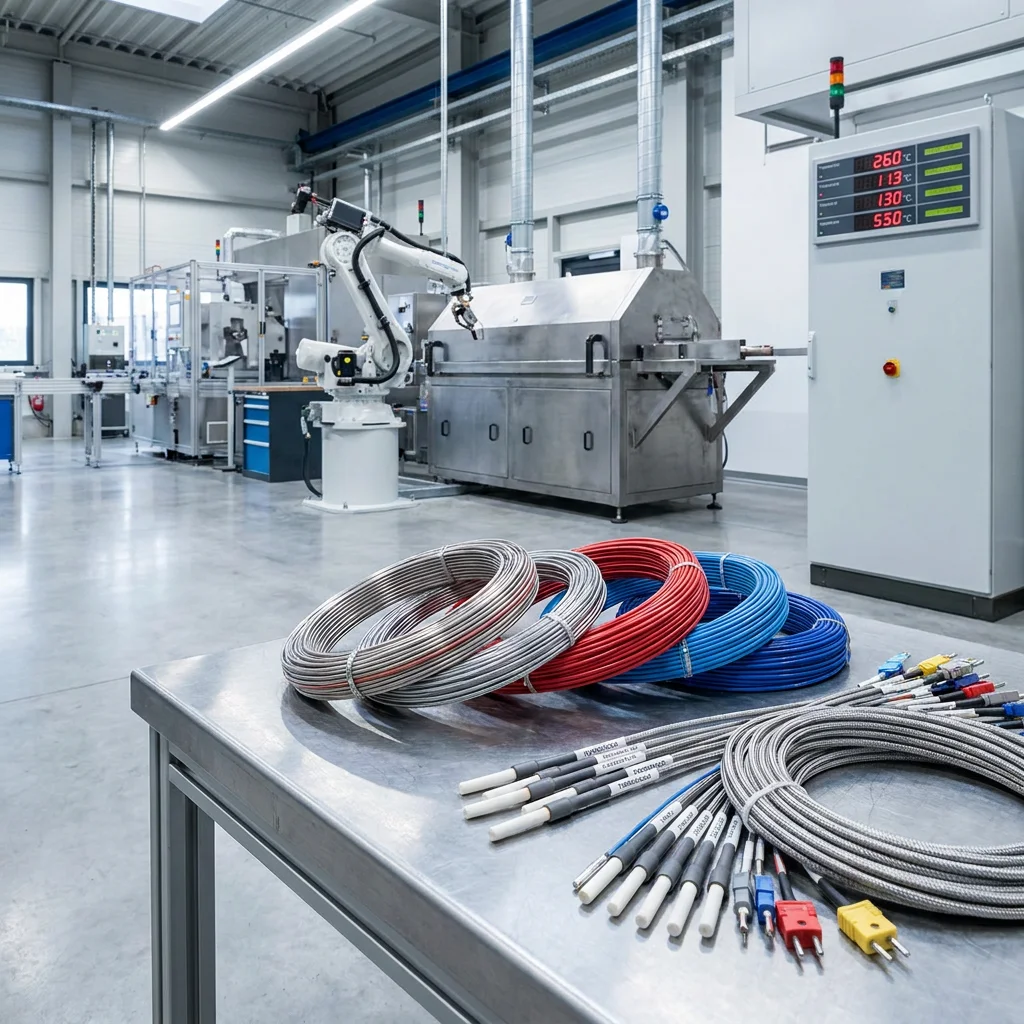
The Fundamental Principles of Thermocouples
A thermocouple is a simple yet elegant device consisting of two different electrical conductors forming an electrical junction. The primary principle governing its operation is the Seebeck Effect, named after the German physicist Thomas Johann Seebeck, who discovered it in 1821.
When there is a temperature gradient across the junction of two dissimilar metals, a voltage (electromotive force, or EMF) is generated. This voltage is proportional to the temperature difference between the measuring junction (the "hot" junction) and the reference junction (the "cold" junction). By measuring this voltage, industrial systems can calculate the temperature at the hot junction with high precision.
One of the key advantages of thermocouples is their robustness. Unlike resistance temperature detectors (RTDs), thermocouples do not require an external power source to produce a signal, and they can measure a much wider range of temperatures, from cryogenic levels to over 2000°C, depending on the alloy combination used.
Key Types of Industrial Thermocouples
Thermocouples are categorized into several types based on the metals used in their construction. Each type has a specific temperature range, sensitivity, and environmental compatibility. Below is a detailed look at the most common types used in modern industry.
Type K (Chromel-Alumel)
Type K is the most common general-purpose thermocouple. It is inexpensive, accurate, and reliable over a wide temperature range (-200°C to +1260°C). The positive leg is made of Chromel (90% nickel, 10% chromium), and the negative leg is made of Alumel (95% nickel, 2% manganese, 2% aluminum, and 1% silicon). It is highly resistant to oxidation in oxidizing atmospheres.
Type J (Iron-Constantan)
Type J is also very popular due to its lower cost and high sensitivity. However, it has a more limited range (0°C to 750°C) because the iron leg can oxidize and become brittle at higher temperatures. It is ideal for vacuum and reducing atmospheres but should be avoided in oxidizing environments.
Type T (Copper-Constantan)
Type T is exceptionally stable and is often used in cryogenic and low-temperature applications (-200°C to 350°C). It is resistant to corrosion in moist environments and is highly accurate, making it a favorite for laboratory and medical applications.
Type N (Nicrosil-Nisil)
Type N was developed to overcome the instabilities associated with Type K at high temperatures. It offers better stability and resistance to oxidation. It is increasingly used in applications where high-temperature accuracy is critical, such as in gas turbine exhaust monitoring.
Noble Metal Thermocouples (Types R, S, and B)
For extreme temperatures, noble metal thermocouples are used. These utilize platinum and rhodium in various proportions. Type R and S can measure up to 1600°C, while Type B can reach 1800°C. They are highly stable but very expensive, reserved for specialized high-heat applications like glass manufacturing and laboratory standards.
Responsive Technical Comparison Table
To help engineers and procurement specialists make informed decisions, we have provided a responsive comparison table of the most common thermocouple types.
| Type | Metals (Positive / Negative) | Range (°C) | Common Applications |
|---|---|---|---|
| Type K | Chromel / Alumel | -200 to 1260 | General purpose, Ovens, Gas turbines |
| Type J | Iron / Constantan | 0 to 750 | Plastics industry, Vacuum furnaces |
| Type T | Copper / Constantan | -200 to 350 | Cryogenics, Food processing |
| Type S | Pt-10%Rh / Platinum | 0 to 1600 | High temp furnaces, Glass industry |
| Type N | Nicrosil / Nisil | -270 to 1300 | Aerospace, High stability needs |
The Role of Soft Magnetic and Expansion Alloys
While thermocouples handle the sensing, other precision alloys are vital for the integrity of the measuring system. Soft Magnetic Alloys, such as Permalloy (1J79, 1J85 ), are used in the shielding of sensitive electronics from electromagnetic interference (EMI). In high-precision temperature controllers, maintaining a clean signal is paramount for accurate readings.
Furthermore, Expansion Alloys like Invar 36 and Kovar play a crucial role in the mechanical construction of sensor housings and glass-to-metal seals. Kovar, with its coefficient of thermal expansion (CTE) matching that of hard glass, is essential for hermetically sealed thermocouple probes used in harsh chemical environments or aerospace applications. These materials ensure that the sensor remains stable and functional despite extreme thermal cycling.
Industrial Applications in 2026
As we look at the industrial trends for 2026, thermocouples are finding new applications in green energy and advanced manufacturing.
1. Hydrogen Production and Storage
The transition to a hydrogen economy requires precise temperature control in electrolyzers and storage tanks. Thermocouples made with corrosion-resistant alloys are essential for monitoring these high-pressure, reactive environments safely.
2. Electric Vehicle (EV) Battery Manufacturing
Maintaining optimal temperatures during battery cell production and testing is critical for performance and safety. Fast-response thermocouples are integrated into automated production lines to ensure every cell meets quality standards.
3. Aerospace and Satellite Systems
In the vacuum of space and the extreme heat of atmospheric re-entry, thermocouples provided with specialized expansion alloy housings ensure that critical systems remain within operational temperature limits.
Selection Criteria for High-Performance Alloys
Choosing the right thermocouple or precision alloy involves several considerations:
Temperature Range: Ensure the alloy can withstand the maximum and minimum temperatures of your process.
Chemical Compatibility: Will the alloy react with the gases or liquids in the environment?
Response Time: Does the application require thin wire for fast response or thick wire for durability?
Accuracy Requirements: Standard limits of error versus special limits of error (SLE).
At Changzhou DLX Alloy Company, we specialize in providing high-quality Thermocouple wires, Soft Magnetic Alloys, and Expansion Alloys tailored to these rigorous industrial demands. Our commitment to precision ensures that your temperature measurement systems operate at peak efficiency.
Conclusion
Thermocouples are more than just simple wires; they are the sensory organs of the industrial world. By understanding the Seebeck effect, the nuances between different thermocouple types, and the vital role played by supporting materials like soft magnetic and expansion alloys, businesses can achieve unparalleled precision in their thermal management systems.
As industrial processes become more complex in 2026 and beyond, the collaboration between sensor technology and advanced metallurgy will continue to drive innovation. Whether you are building high-temperature furnaces or precision aerospace components, the right choice of alloy is the foundation of your success.
For more technical information or to discuss your specific project requirements, please contact our engineering team. We offer a wide range of precision alloys, including Invar, Kovar, and specialized thermocouple wires, designed to meet international standards and your custom specifications. Let us help you find the perfect material solution for your next challenge.