Precision Alloys for Aerospace & Hydrogen: Invar 36, Kovar, and Pt-Ir Industrial Guide 2026
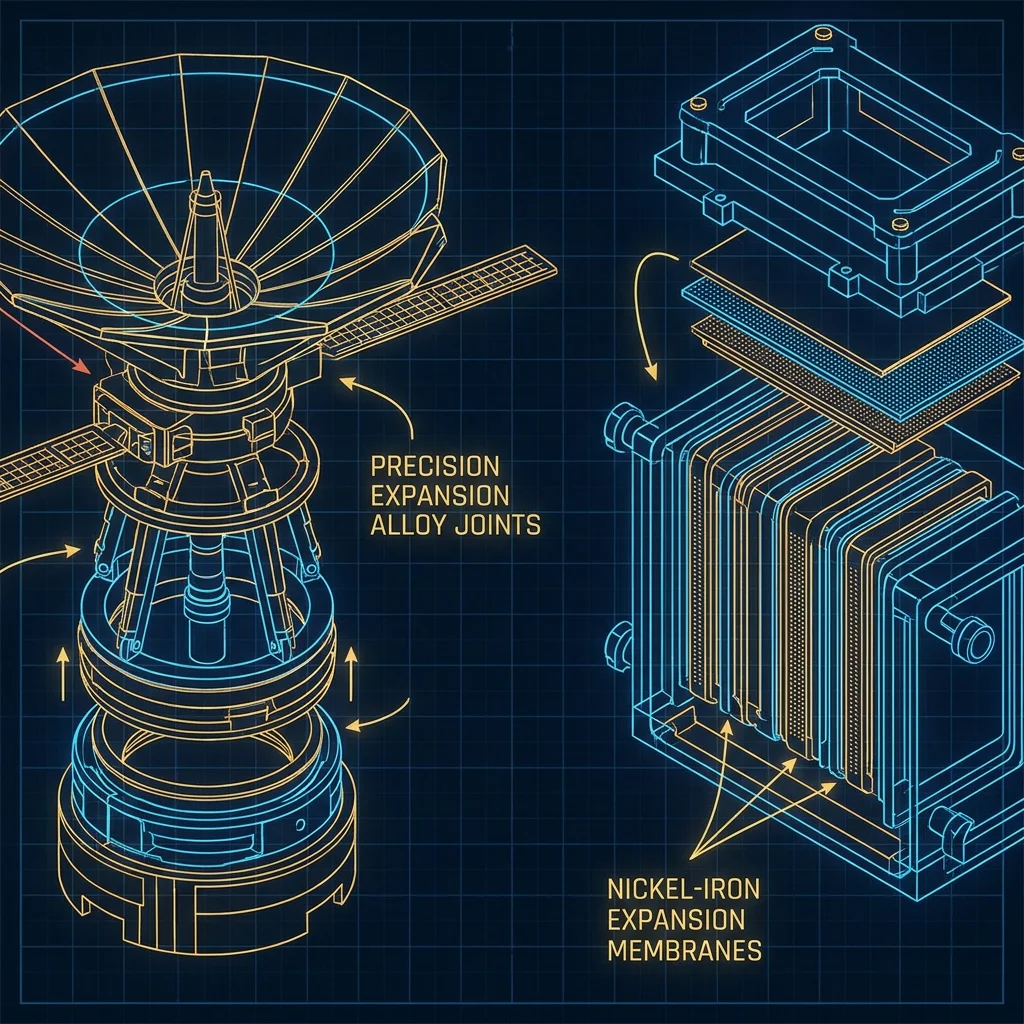
The Critical Role of Precision Alloys in Modern Engineering: A Comprehensive Guide
In the contemporary industrial landscape, the demand for materials that exhibit exceptional stability under extreme conditions has never been higher. As we push the boundaries of aerospace exploration and transition toward a sustainable hydrogen economy, the reliance on precision alloys such as Invar 36, Kovar, and Platinum-Iridium has become a cornerstone of technological advancement. DLX Metal, a premier Chinese exporter of high-performance metallurgical solutions, provides the critical material foundation required for these high-stakes applications.
Precision alloys are defined by their unique physical properties, which are meticulously controlled during the manufacturing process. Unlike standard structural steels, these materials are engineered to provide specific thermal expansion coefficients, magnetic properties, or chemical resistance. For engineers working in aerospace and hydrogen sectors, choosing the right alloy is not merely a matter of strength; it is a matter of dimensional integrity and long-term reliability.
Material Analysis: Understanding the Giants of Precision Metallurgy
To appreciate why these alloys are indispensable, one must delve into their chemical compositions and the physical phenomena that govern their behavior. Below, we analyze the three primary materials currently dominating the high-tech export market.
1. Invar 36 (Fe-Ni36): The Zero-Expansion Wonder
Invar 36, also known as FeNi36 or UNS K93600, is a nickel-iron alloy celebrated for its uniquely low coefficient of thermal expansion (CTE). From cryogenic temperatures up to approximately 200°C, Invar 36 remains dimensionally stable, making it the "gold standard" for precision instruments. The alloy’s behavior is rooted in the "Invar Effect," a complex quantum mechanical interaction between its magnetic properties and its crystal lattice that compensates for the natural thermal expansion of atoms.
DLX Metal ensures that our Invar 36 undergoes vacuum induction melting (VIM) and electroslag remelting (ESR) to minimize impurities. This results in a material that is not only stable but also highly workable for complex machining tasks.
2. Kovar (ASTM F15): The Master of Hermetic Sealing
Kovar is a vacuum-melted, iron-nickel-cobalt alloy (approximately 29% nickel and 17% cobalt). Its primary utility lies in its thermal expansion curve, which closely matches that of hard (borosilicate) glasses and alumina ceramics. This matching is vital for creating hermetic seals—airtight junctions where metal meets glass or ceramic—without the risk of cracking during thermal cycling.
In the world of electronics and aerospace sensors, Kovar provides the structural housing that protects sensitive components from the harsh vacuum of space or the high-pressure environments of industrial reactors. Our Kovar supplies are strictly controlled to meet ASTM F15 standards, ensuring consistent performance for global manufacturers.
3. Platinum-Iridium (Pt-Ir): The Pinnacle of Inertness and Strength
While Invar and Kovar handle dimensional stability, Platinum-Iridium alloys handle extreme environments and electrical precision. Typically composed of 10% to 20% Iridium, these alloys combine the noble properties of Platinum with the extreme hardness of Iridium. Pt-Ir is virtually immune to oxidation and chemical attack, and it maintains high electrical conductivity.
In hydrogen technology, Pt-Ir plays a critical role as a catalyst and a durable electrode material. In aerospace, it is used in spark plug electrodes for high-performance engines and as a material for precision standards due to its mass stability over decades.
Technical Parameters and Comparison Tables
For engineers and procurement officers, hard data is the most valuable asset. The following tables summarize the key physical and chemical properties of these alloys as supplied by DLX Metal.
Table 1: Physical Property Comparison
| Property | Invar 36 | Kovar | Pt-Ir 10% |
| Density (g/cm³) | 8.11 | 8.36 | 21.55 |
| Melting Point (°C) | 1430 | 1450 | 1780 - 1890 |
| CTE (20-100°C, 10⁻⁶/°C) | 1.2 - 1.5 | 5.1 - 5.5 | 8.7 |
| Tensile Strength (MPa) | 490 | 520 | 380 (Annealed) |
| Thermal Conductivity (W/m·K) | 10.5 | 17.3 | 31.0 |
Table 2: Chemical Composition Standards
| Element (%) | Invar 36 (Typical) | Kovar (ASTM F15) | Pt-Ir 20% |
| Nickel (Ni) | 36.0 | 29.0 | - |
| Cobalt (Co) | - | 17.0 | - |
| Iron (Fe) | Balance | Balance | - |
| Iridium (Ir) | - | - | 20.0 |
| Platinum (Pt) | - | - | Balance |
Industrial Applications: Aerospace and Beyond
The synergy between precision alloys and aerospace technology is long-standing. As we move into 2026, the complexity of these applications continues to grow.
Aerospace: Dimensional Integrity in Orbit
In aerospace, temperature fluctuations are extreme. A satellite orbiting the Earth moves from the shadow (cryogenic cold) into direct sunlight (intense heat) every 90 minutes. Standard metals would expand and contract significantly, throwing delicate optical instruments and sensors out of alignment. Invar 36 is used for mirror supports in space telescopes and laser benches, ensuring that "zero expansion" translates to "zero error."
Furthermore, the trend toward composite materials in aircraft manufacturing has increased the demand for Invar. Composite parts are cured at high temperatures in molds. If the mold expands more than the composite material, the final part will be warped. Invar 36 molds, with their low CTE, match the expansion of carbon-fiber-reinforced polymers (CFRP), enabling the production of large-scale, high-precision fuselage sections.
Hydrogen Technology: The Future of Clean Energy
Hydrogen is the smallest atom, and it presents a significant challenge: hydrogen embrittlement. This is where traditional metals become brittle and crack when exposed to hydrogen. Precision alloys used in hydrogen technology must be resistant to this phenomenon while facilitating the electrochemical reactions required for fuel cells and electrolyzers.
Platinum-Iridium is a critical component in PEM (Proton Exchange Membrane) electrolyzers. Used as a catalyst on the anode side, it facilitates the splitting of water into hydrogen and oxygen. Its resistance to the acidic environment of the membrane ensures a service life of tens of thousands of hours. Additionally, Kovar is increasingly used in the high-pressure sensors and valve housings of hydrogen refueling stations, where its ability to maintain a hermetic seal prevents leaks of the highly flammable gas.
2026 Trends in Precision Metallurgy
As a leading exporter, DLX Metal monitors the shifting tides of the global market. Several key trends are emerging for 2026 and beyond:
-
Additive Manufacturing (3D Printing): There is a massive push to develop Invar 36 and Kovar powders for metal 3D printing. This allows for the creation of lightweight, internally cooled structures that were previously impossible to machine.
-
Miniaturization: As electronics become smaller, the tolerance for thermal expansion becomes tighter. This is driving the use of Kovar in micro-electro-mechanical systems (MEMS).
-
Green Metallurgy: Global supply chains are demanding "Green Nickel" and more sustainable smelting processes. DLX Metal is committed to reducing the carbon footprint of our alloy production to meet EU and North American sustainability standards.
-
Extreme Environment Resilience: Deep-space exploration (Mars and beyond) requires alloys that can withstand even more prolonged exposure to cosmic radiation and extreme cold, leading to new R&D in Platinum-group metal dopants for traditional precision alloys.
Pain Points and Professional Solutions
In the B2B procurement process, several recurring pain points can delay projects or lead to failure. Here is how DLX Metal addresses these challenges.
Pain Point 1: Inconsistent Thermal Expansion Coefficients
Many suppliers provide alloys that meet chemical standards but fail on physical performance due to poor heat treatment. Our Solution: We provide a CTE test report for every batch of Invar 36 and Kovar, ensuring the material performs exactly as simulated in your CAD software.
Pain Point 2: Poor Machinability and Surface Finish
Nickel-heavy alloys can be "gummy" and difficult to machine, leading to tool wear and poor tolerances. Our Solution: We offer controlled-grain-size variants and specific annealing states that optimize the material for CNC milling and turning.
Pain Point 3: Supply Chain Volatility
Prices for Cobalt and Platinum can fluctuate wildly. Our Solution: As a major Chinese exporter, DLX Metal offers flexible procurement contracts and strategic stockpiling, providing price stability for long-term aerospace projects.
Pain Point 4: Material Purity and Gas Content
In vacuum applications, trace amounts of oxygen or nitrogen can cause outgassing. Our Solution: Our VIM+ESR refining process ensures ultra-low gas content, making our alloys suitable for UHV (Ultra-High Vacuum) environments.
Frequently Asked Questions (FAQ)
Can Invar 36 be welded to other steels?
Yes, Invar 36 can be welded using GTAW (TIG) or GMAW (MIG) processes. However, it is critical to use Invar-matching filler metal to maintain the low expansion properties at the joint. Welding to stainless steel is possible but requires careful management of the differing expansion rates to avoid stress cracking.
Why use Platinum-Iridium instead of pure Platinum?
Pure Platinum is relatively soft. Adding Iridium significantly increases the hardness, tensile strength, and melting point of the alloy while maintaining the chemical inertness of Platinum. For electrodes and catalysts in hydrogen technology, this added durability is essential for long-term operation.
Is Kovar magnetic?
Yes, Kovar is ferromagnetic below its Curie temperature (approx. 435°C). This is an important consideration for sensors that might be sensitive to magnetic interference. If a non-magnetic controlled expansion alloy is needed, other options like specific Inconel grades might be considered, though they do not match glass expansion as perfectly as Kovar.
How does DLX Metal ensure export quality?
All our materials undergo rigorous testing, including ultrasonic inspection for internal defects, chemical analysis via spectroscopy, and mechanical testing. We are ISO 9001 certified and our products comply with international standards such as ASTM, AMS, and DIN.
Conclusion: Your Partner in High-Precision Metallurgy
The success of aerospace missions and the viability of hydrogen as a fuel source depend on materials that do not fail. Invar 36, Kovar, and Platinum-Iridium are more than just metals; they are the enablers of modern science. As these technologies advance toward 2026, the need for a reliable, technically proficient, and cost-effective supply chain becomes paramount.
DLX Metal stands at the forefront of this industry, bridging the gap between advanced metallurgical research and global industrial demand. Whether you are designing the next generation of satellite sensors or building a high-capacity hydrogen electrolyzer, our team of experts is ready to provide the precision alloys you need to succeed. Contact us today to discuss your technical specifications and experience the reliability of a premier Chinese metallurgical partner.
DLX Metal - Precision Materials for a Precise Future.